Keep Reminders Fresh: Never Resend Yesterday’s
Copies it for your coding agent, which checks the fit and builds it · The whole record, as markdown
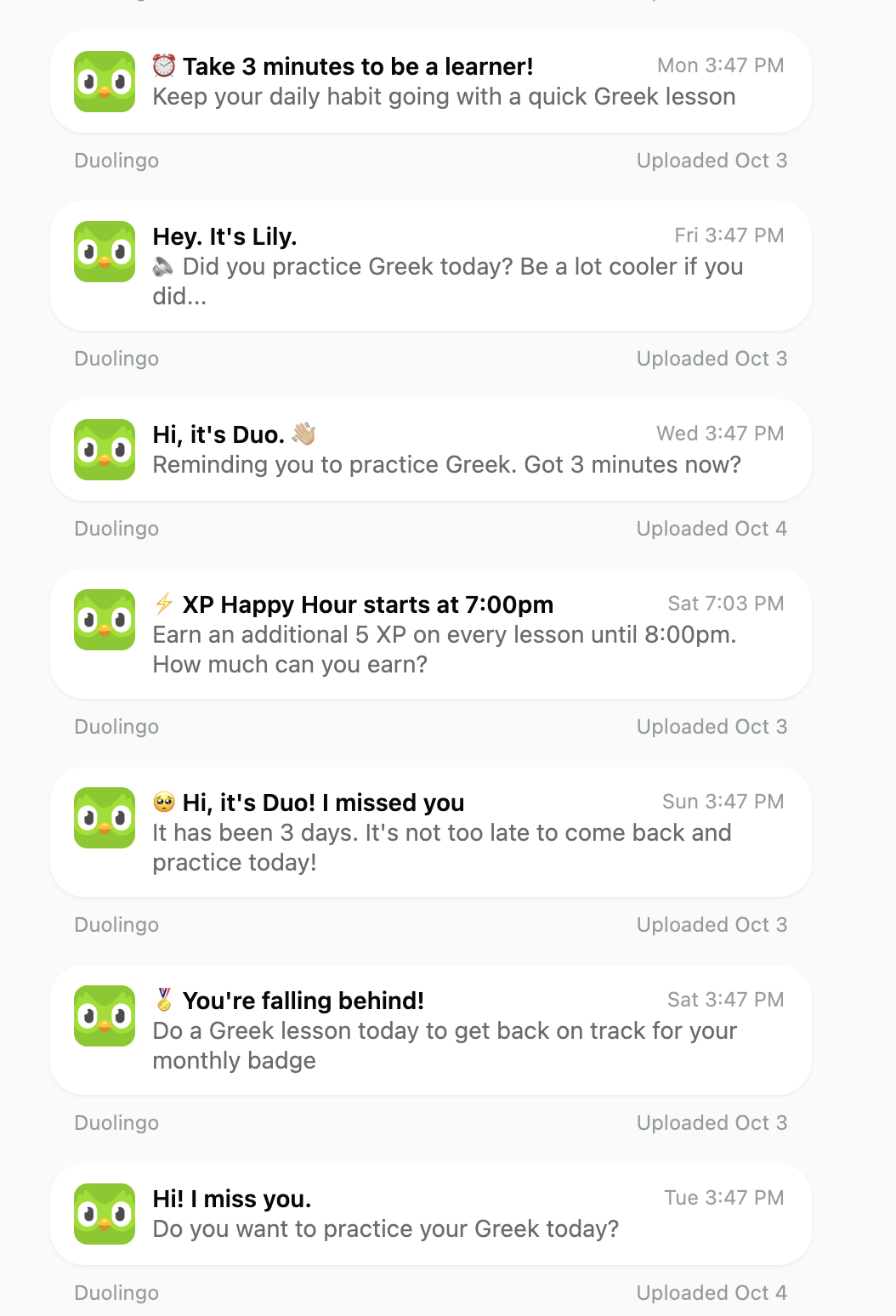


Duolingo designed its notification system to avoid settling on the same template for each person. A simple no-last-repeat rule is a practical adaptation for an app that does not have enough data for a learning bandit.
Direct research included. Read the findings and limits.
- 3 entries · direct research
- 1 entry · related research
From Duolingo, Drink Less
Overview
Keep recurring reminders fresh with a small pool of useful messages. Pick a variant at each send, skip the one this person got last, and log the choice so you can learn which messages lead to action.
Fits when
- Apps that already send a recurring reminder and can write four or five honest variants of it
- Products whose reminder is one fixed sentence today
- Teams that can log the chosen variant, completed tasks and notification opt-outs
Evidence & sources 4 entries
Read sources here with all-access, or get every source when you copy this play.
Good to knowFit and evidence notes
- Fit to consider
- Measure retention separately from opens: Drink Less found no significant difference in time to disengagement between reminder policies.
- About the evidence
- The simple no-last-repeat rule has offline support from Duolingo, but no isolated live test; Drink Less found varied and fixed reminders similarly effective.
Copy includes 2 more limitations, 2 failure modes, the full evidence, and adaptation guidance.
Will this help what you’re building?
Private to Motifs. It helps decide what to research next.
More plays like this
Browse all 32 playsNo plays match yet. Clear the search or choose another category.