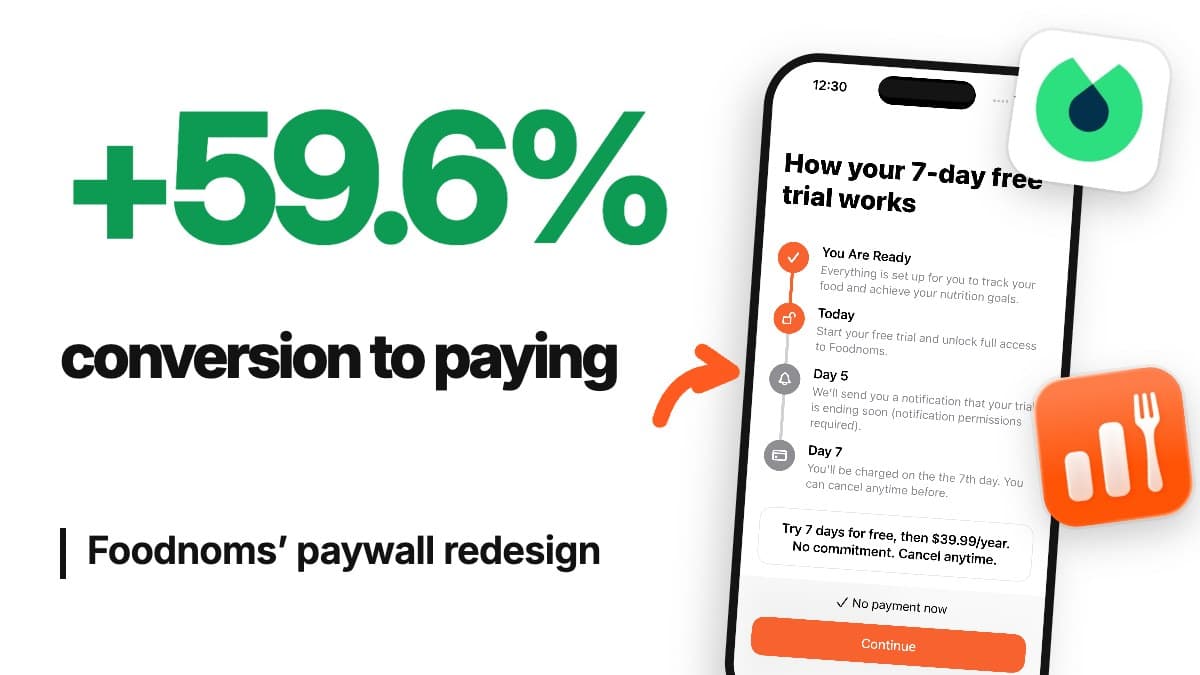
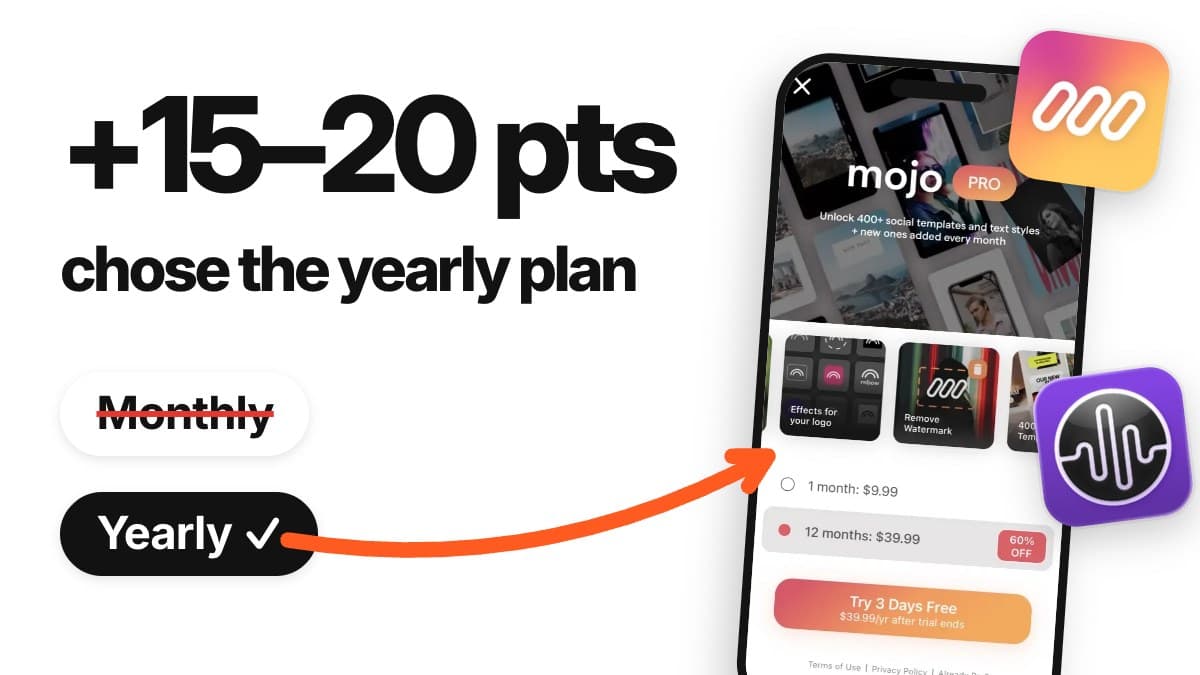
3 Strategies Learning Apps Use to Turn Trials into Payers
The Trial Duration That Performed Best
Copies it for your coding agent, which checks the fit and builds it · The whole record, as markdown
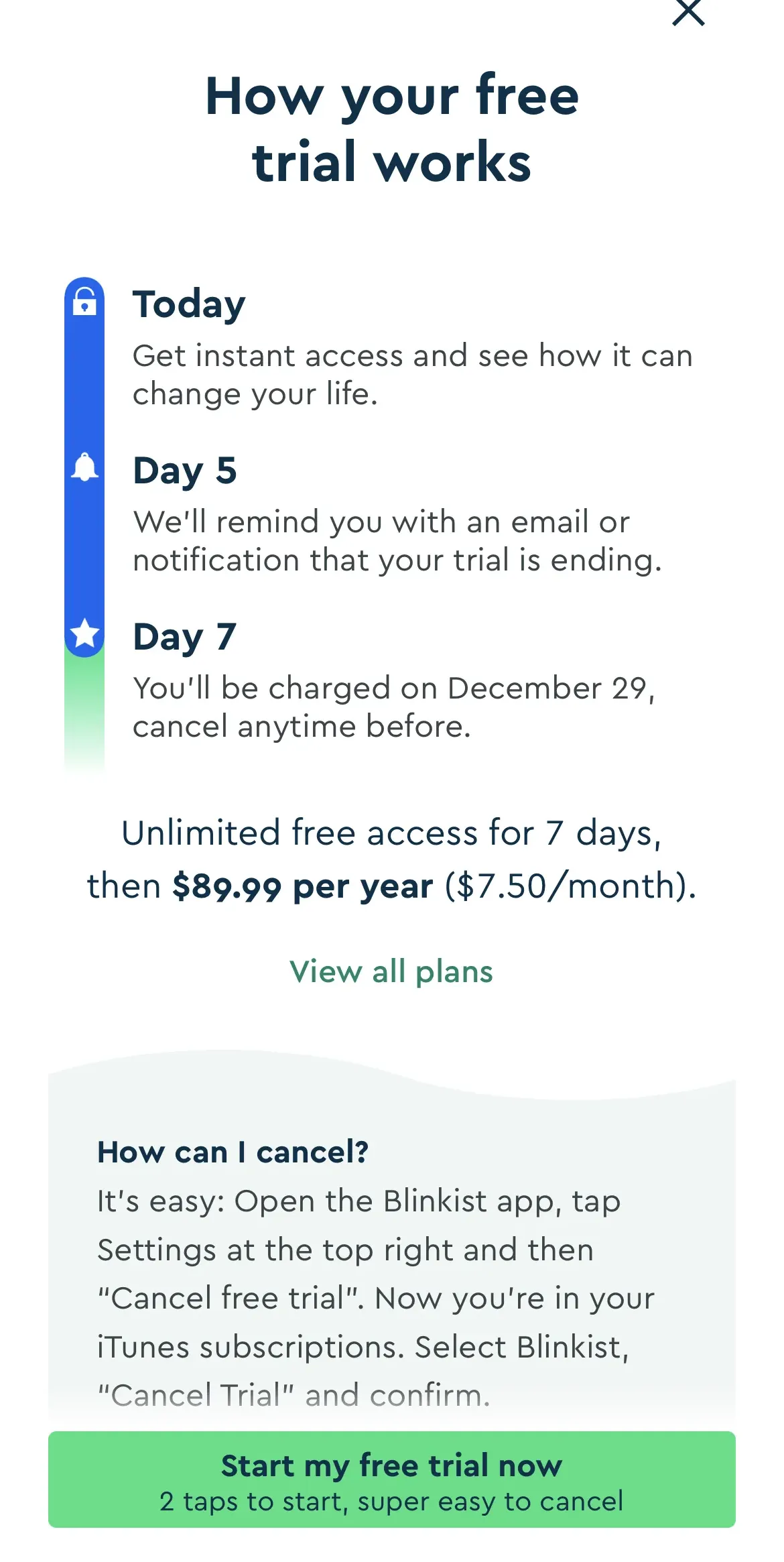

Two randomised experiments: 15.44% vs 14.63% subscribed with 7 vs 30 days (software firm, 101,024 held-out users); 0.445% vs 0.368% converted over two years with 7 vs 3 days (image editor, 680,588 users). Different businesses: not a tested optimum.
Direct research included. Read the findings and limits.
- 3 entries · direct research
- 3 entries · company accounts
From Yoganarasimhan et al., Zhang and Duan, Miller, Sahni and Strulov-Shlain, RevenueCat, Mimo
Overview
The number of free days before the first charge changes who starts, who pays and when. Benchmarks say longer trials convert better; the randomised experiments point the other way.
Firms have no consensus on trial length: a short trial limits free-riding and the cost of non-paying users, while a long one can build engagement, switching costs and learning (Yoganarasimhan, Barzegary and Pani).
Fits when
- Longer trials: task-oriented rather than creativity-oriented features, and high-individualism markets (image-editor experiment)
- Longer trials: experienced users of the software rather than beginners or students (software-firm experiment)
- Any product that can run a randomised length test and measure paid conversion months after the trial
Evidence & sources 6 entries
Read sources here with all-access, or get every source when you copy this play.
Good to knowFit and evidence notes
- Fit to consider
- Avoid a longer trial if users postpone the activation behaviour during the extra days instead of completing it.
- About the evidence
- The three randomised experiments compare different pairs of lengths (7/14/30 days, 3/7 days, 2/4 weeks) in different businesses; they do not locate an optimum outside the lengths each tested.
Copy includes 3 more limitations, 5 failure modes, the full evidence, and adaptation guidance.
Will this help what you’re building?
Private to Motifs. It helps decide what to research next.